
A little background to my work in this area.
I first met Dr Dolly Daou at l’Ecole de Design Nantes Atlantique where she was the Director of the Masters Food Lab. We worked alongside each other on certain projects and attended juries together and soon became close colleagues. I was recently honoured to be invited by Dolly, acting as Guest Editor of the Journal for the Design for All Institute of India, to submit an essay in honour of its celebratory 20th anniversary to celebrate women designers working in this field.
For 20 years it has demonstrated its continuity, global and diverse expression, receptivity, and limitless achievement by inviting guest editors for its monthly publications.
This was a timely request, as I was retiring at the end of December, 2025, so a nice way to talk about what I had achieved in the field of Design for All, throughout my career at l’Ecole de Design Nantes Atlantique and Rennes School of Business.
It was very cathartic to write, as you tend to forget all the experiences that you have had in a career spanning over 30 years and the key word that kept coming up time and time again, with the ups and downs that life throws at you, was ‘resilience’. I was delighted to see other women who I had read about or met along the way taking part in this special issue too.
I have met thousands of lovely students from all around the world that have taught me so much too about their cultures and their views on life and design, and I’ve worked with some very talented teachers and pedagogical staff too. So, it’s a way of finally closing one door and opening another new chapter in my life.
I currently have lots of new projects to work on. I am in the process of writing a book and would love to carry out more research and learn new skills – but yes, I’d like to relax too! If you want to stay in touch please do. I will write updates here.
You can find my essay inside the document here on P.35.
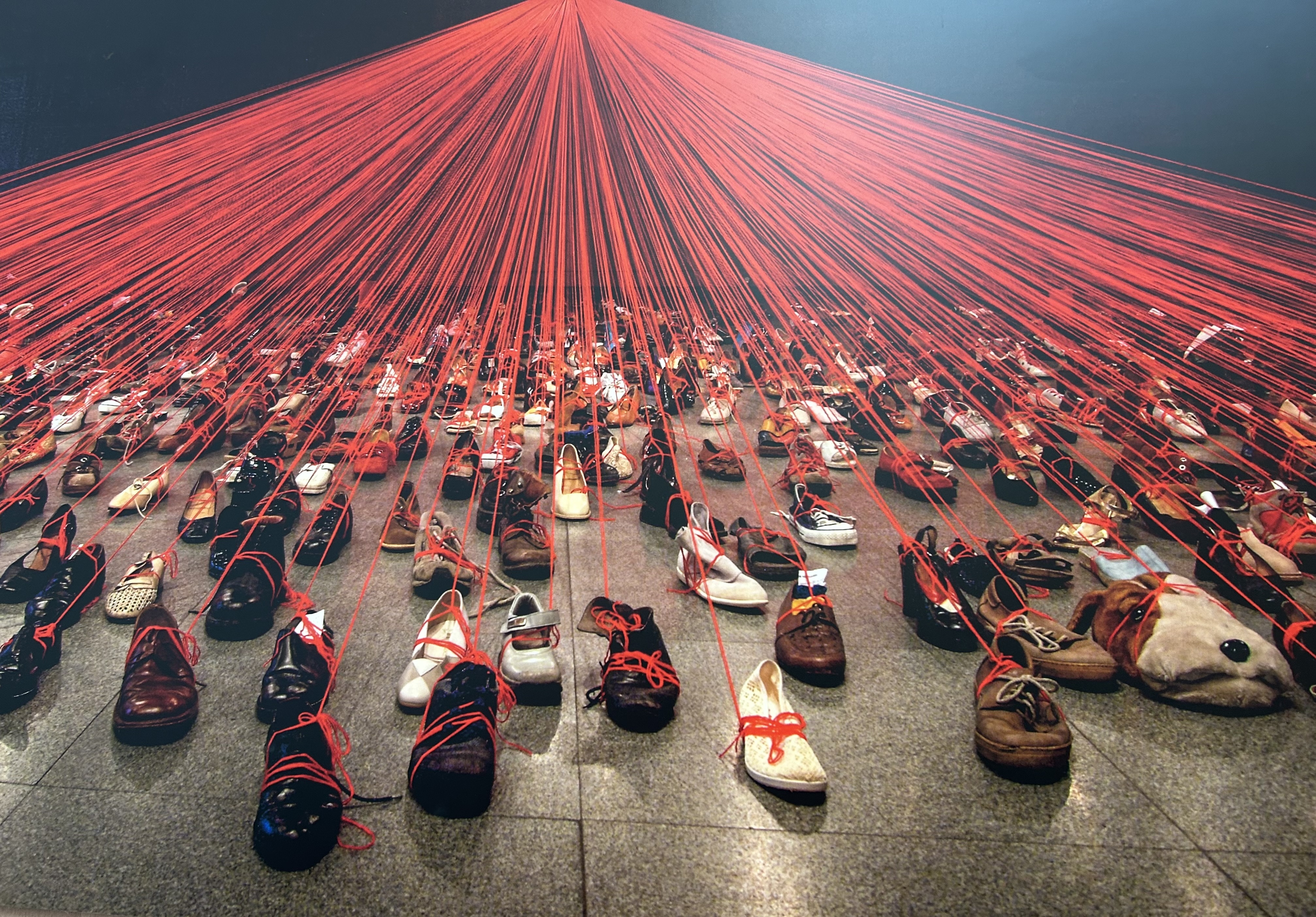
Featured image (top) Over the Continents: Chiharu Shiota a monumental installation using almost 4 miles of red yarn to tie the shoes together and connect them all at a single point. The notes invite visitors “to consider the life of an object” and “the fundamental ties that connect humans to one another.”
November 2025 Vol. 20 No.11 (1)Download
I have been working in this area as well as User Experience Design for many years, in commercial situations and cultural sectors.
Museums and art galleries have to modernise their approach more and more to give the user a unique experience, taking on board the different types of visitors they are welcoming and their associated problems.
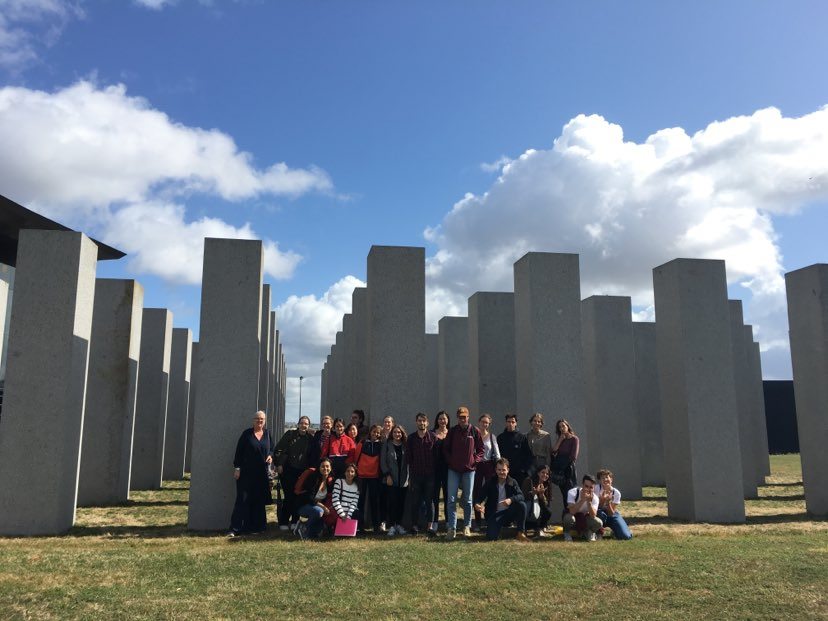
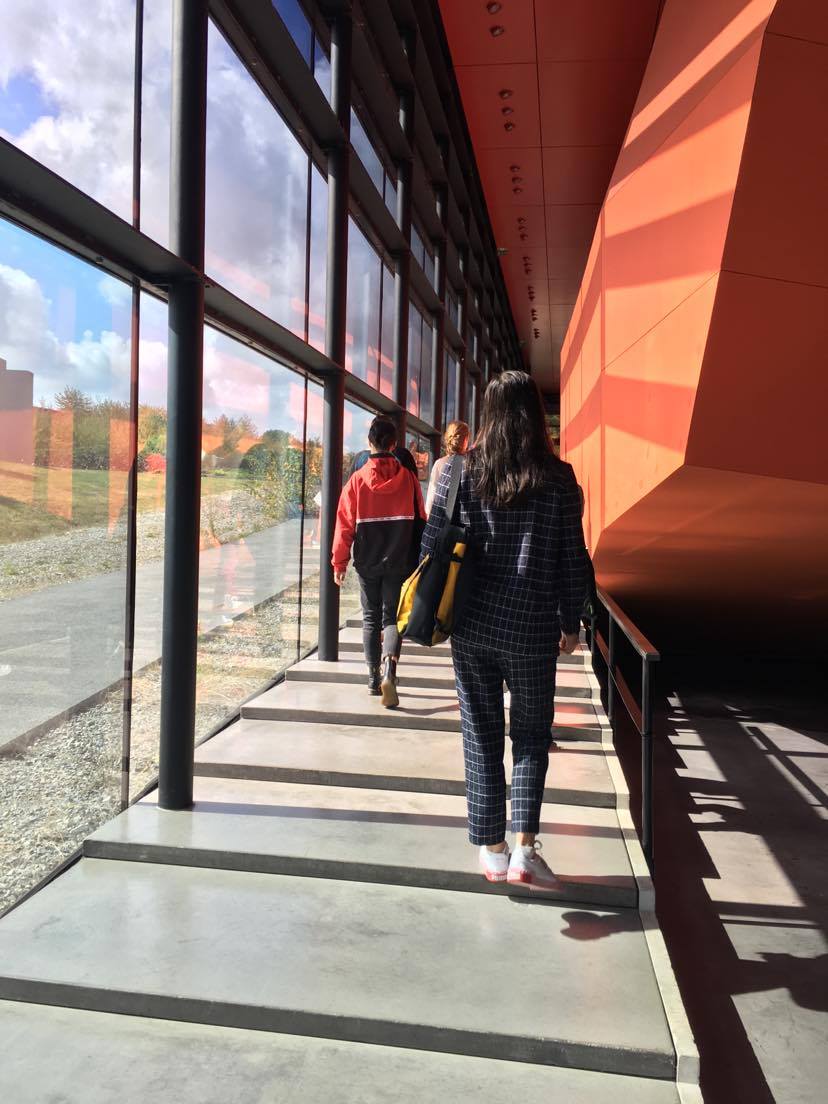
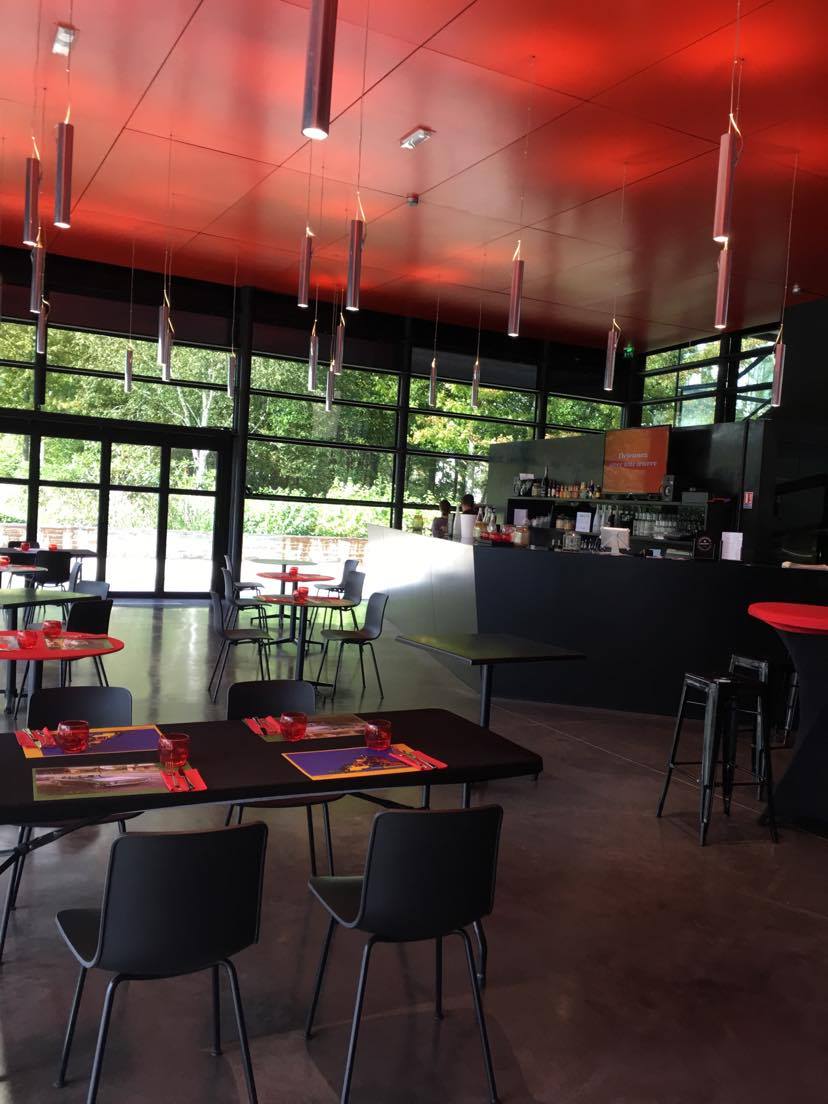
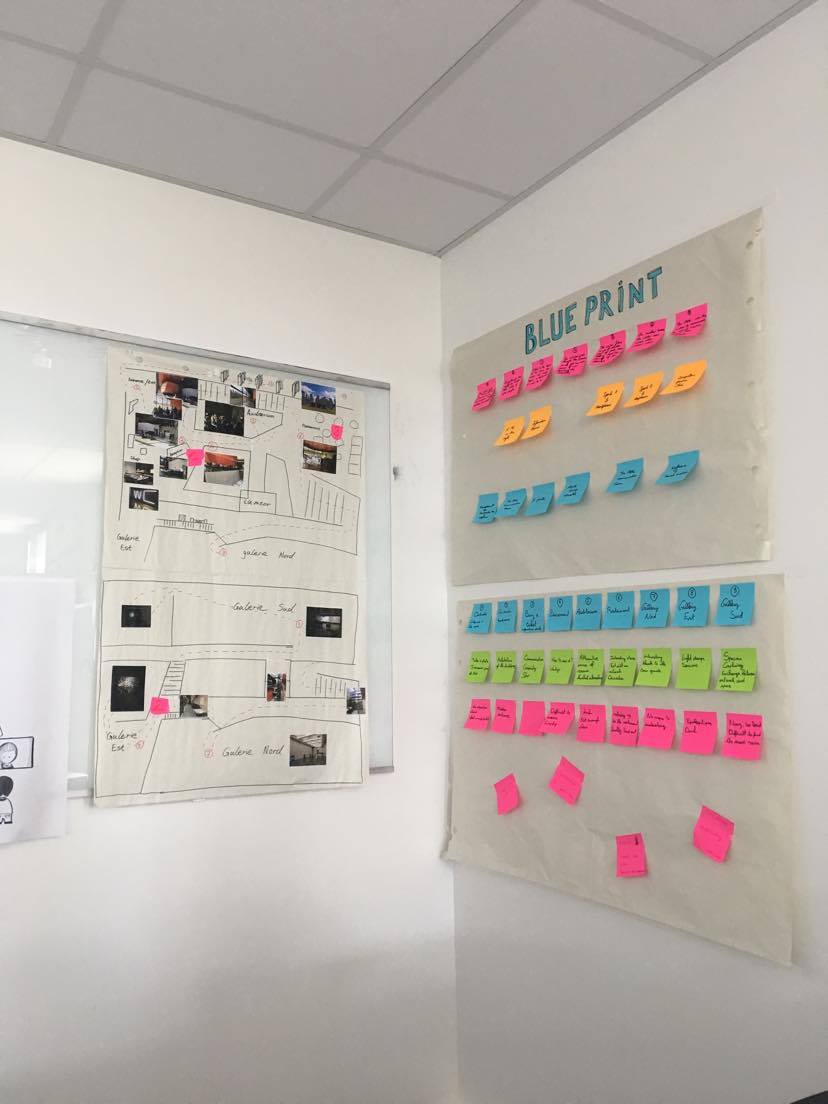

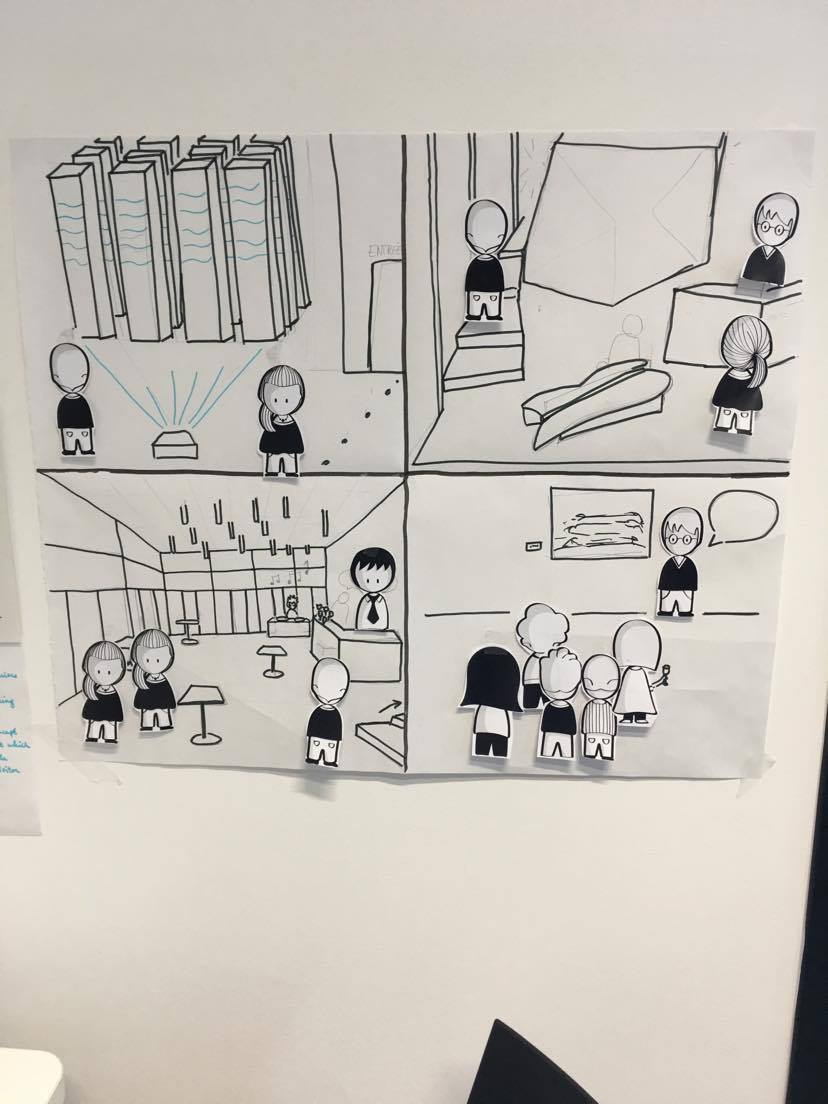
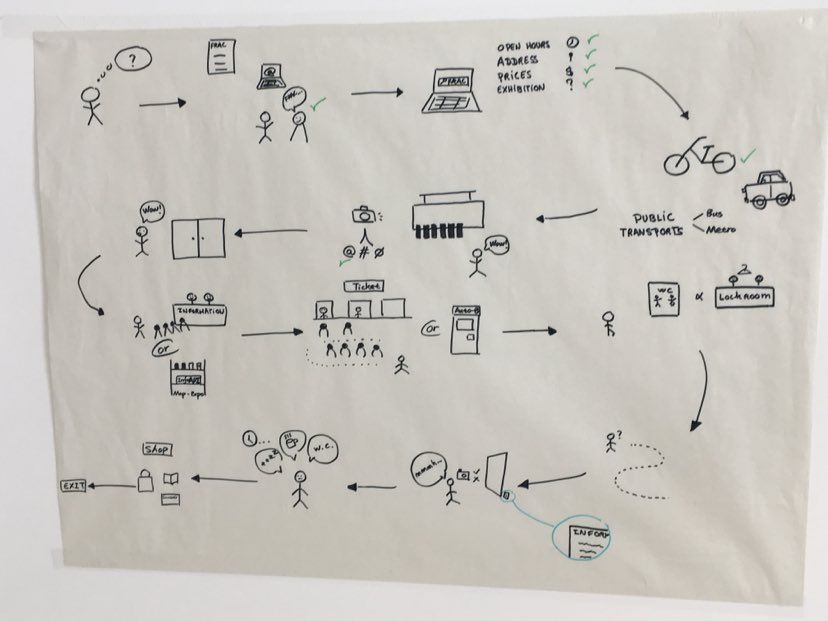
Over the last few years I have been running a short course on User Experience in the cultural sector with great groups of students studying on the Msc in Creative Project Management, Culture & Design in Rennes Business School.
We work with a different cultural centre in Rennes each year. The students find it very rewarding to work in real-life situations where they can have direct feedback from their respective clients.
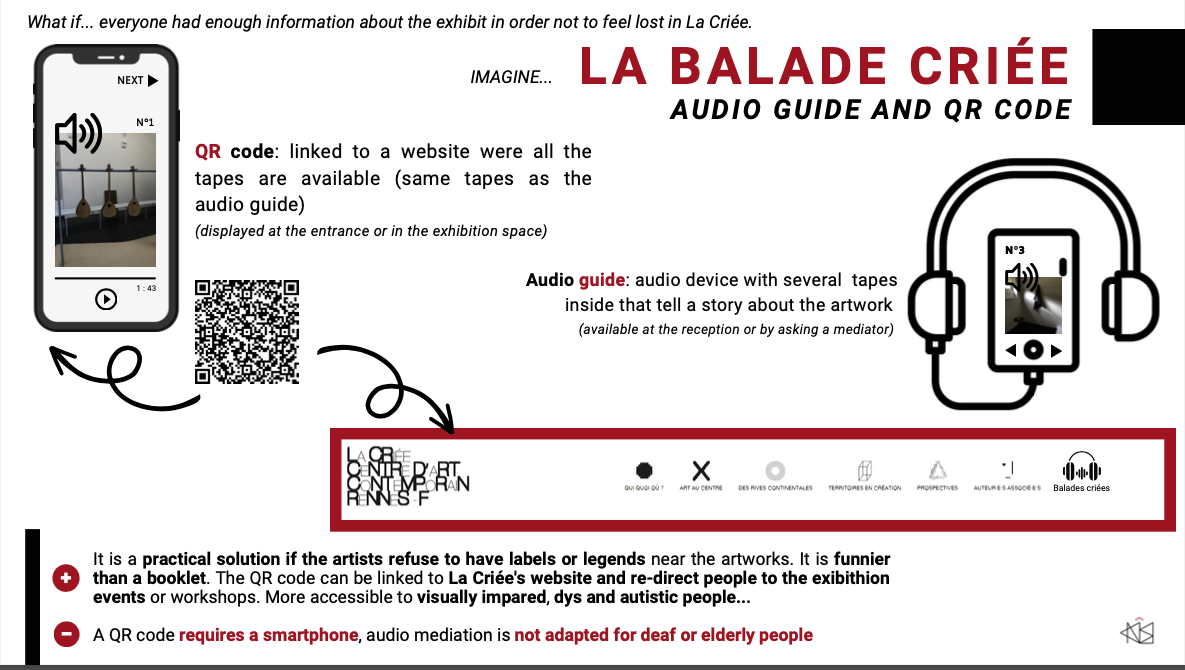
Just before the pandemic we focused on the FRAC Bretagne Art Gallery at Rennes. A great week with some really interesting solutions. Above are some of the Design Thinking techniques. used during the week. This year, we worked with la Criée Contemporary Art Gallery who were exhibiting, The Sun is My Only Ally, by Charbel-Joseph H Boutros – a very interesting exhibition but a challenging one for staff and visitors as there were particular rules for viewing the work and the way staff had to move around the gallery. Here’s an example of a group which wishes to improve the User Experience in la Criée with an audio/visual guide.
Having worked with service industries over a large number of years, in the UK, Europe and now in France, we have developed 2 special workshops for both companies, Design Schools, Business Schools and Universities to help them with their approach to service design and Customer Experience.
Our approach to both subjects, firstly, and most importantly is to think about the customer or user. To put your customer/user at the heart of everything you do. The workshops are based on the principles of Design Thinking. Who are your customers? What lives do they lead? What things are important to them?
Yes, I realise of course, companies need to make profits, and need to be profitable. Yes, I know that training and finding the right staff is difficult too, and I understand the outside pressure from shareholders. But, unless you have happy customers, and happy staff, who understand your values and what your business stands for, you will find it harder to succeed, they are the lifeblood of your business and are usually considered somewhere in the mix of things, but are not always a priority.
So our approach is a “step-by-step” one. Considering of course your brand values, the values and benefits that your products and services bring, and at the same time really getting you to really understand and know your customers. Things can be honed down later in terms of details, cost and efficiency, but the BIG idea at the start is the most important one.
So, next, what do you want your customers to experience at every step of your service?
What do you want them to see? Feel? Hear? Touch? And more importantly remember? How do you want them to talk about you afterwards? What messages do you want them to send their friends and peers on social media? Do you want them to come back for more? Are there any “painful” moments in your service at the moment? Queuing, waiting, lack of sales staff, service not always on time?…
At this step also, we usually do some empathy mapping and interviewing. Here’s a video from Stanford University which clearly explains this process.

Then we normally map out a Customer Journey step-by-step, of your existing service, and highlight the difficult moments and the moments that we call ‘magical’ the moments that can delight the user/customer.
If we are developing a totally new service, we imagine the typical journey map (as below), which of course will be developed and tweaked along the way. This example was developed at concept stage.
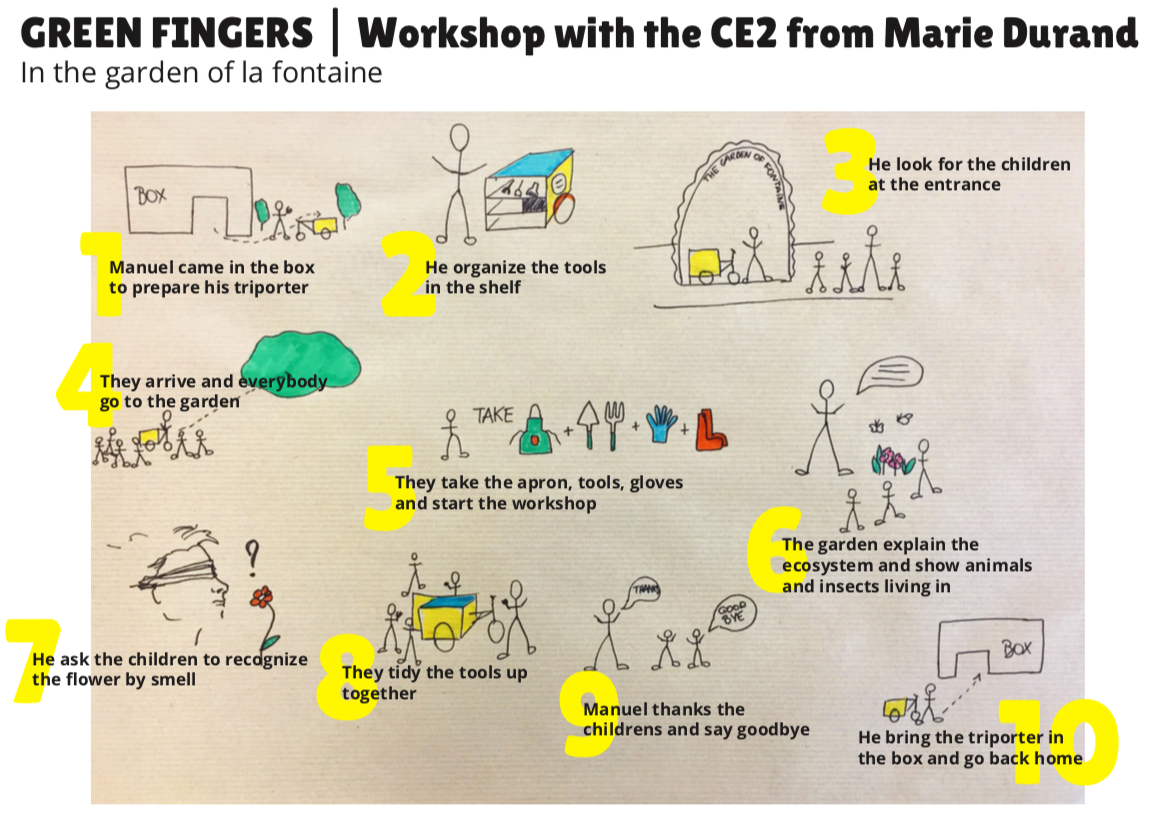
Journey Mapping for a new Educational work bike called “Green Fingers”developed during a Design Thinking Workshop on the Masters Programme at Nimes University in Design, Innovation
and Society
Whether your experience or service is an ephemeral one or a long-lasting one, you want to delight and engage with your audiences at every step of the way and if it feels like their could be some “painful” moments you can design for them and change them to more pleasurable ones.
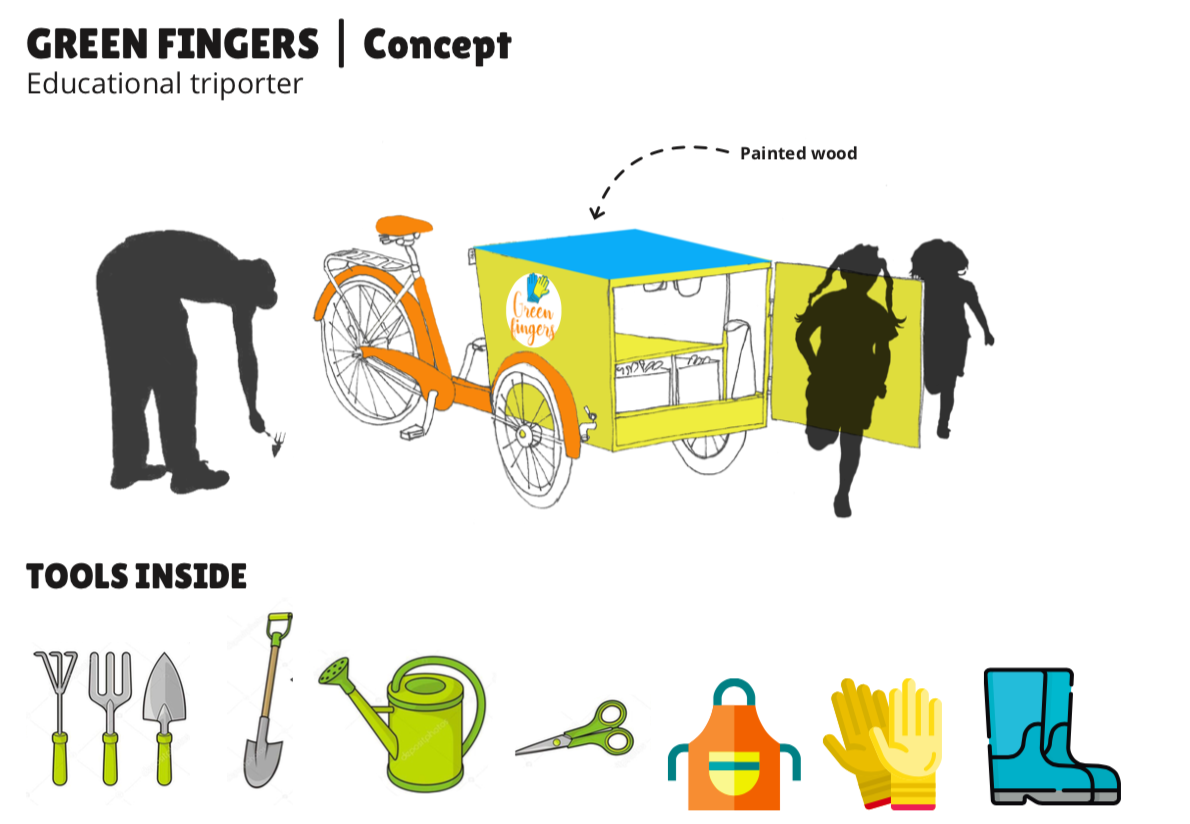
The students had to imagine new uses for work bikes in the future. This concept was to educate schoolchildren in parks. After undertaking interviews with the park’s gardeners it was evident that they wanted a more educational role with both children and adults.
Using techniques gathered from the best thinkers and strategists in the world. We have developed 2 unique workshops which can be specifically tailored to your business or your student disciplines. One focuses on Design Thinking methods, and the other is focused around Empathy methods. Putting yourself in the place of your customers.

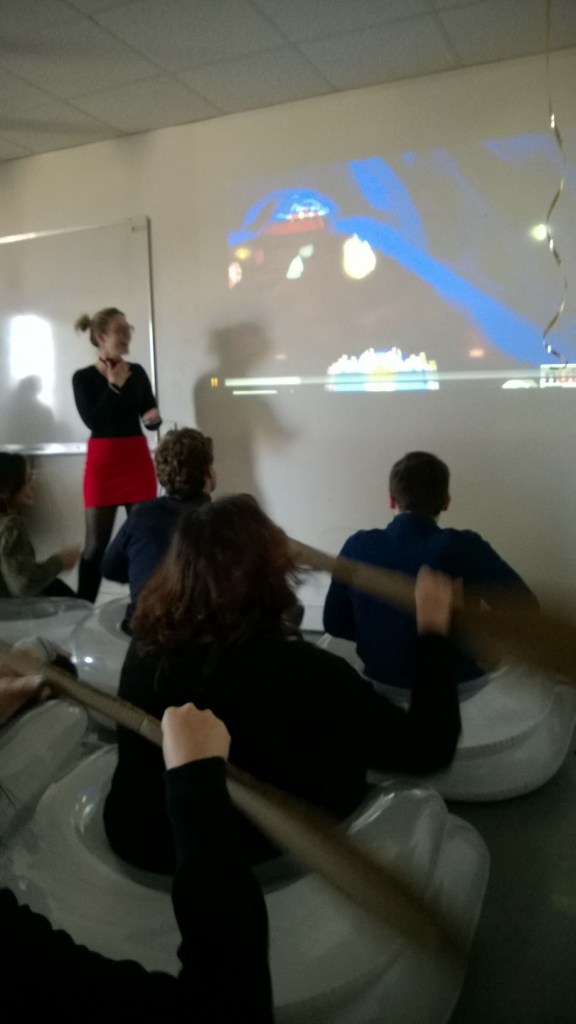
Want to know more about how to bring your brand to life and make your services really meaningful to your customers? Contact Sue Alouche today on 0667452888 or send an email to creativiteconsultants@orange.fr
 DESIGN RESEARCH, MUSINGS AND INSPIRATIONS