
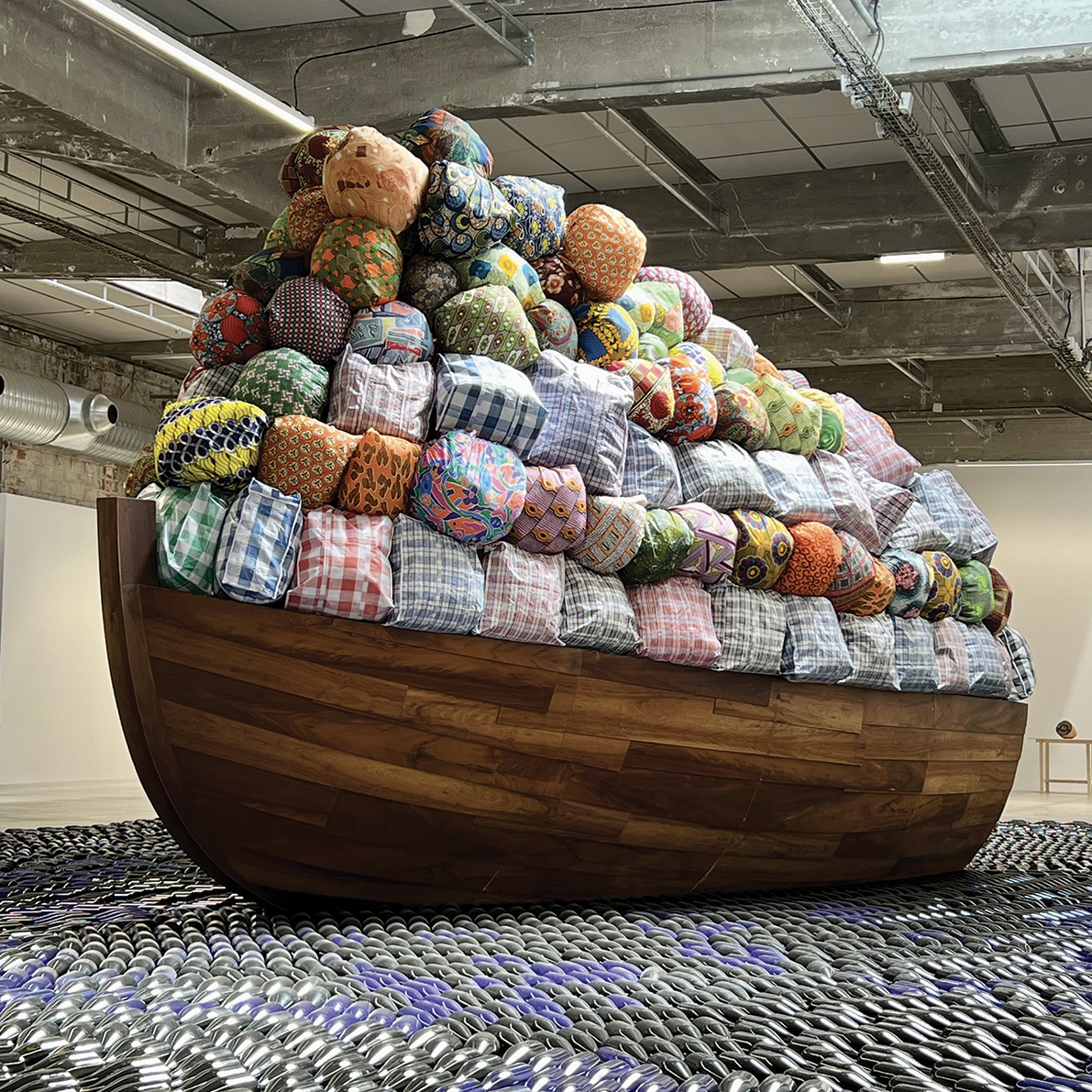
I first became interested in the history of this bag when I went to this exhibition with a friend at the Hab Galerie in Nantes a year or so ago. It was called – Habiter la Terre (“Inhabiting Earth”) and Barthélémy Toguo explores many issues through his work, such as displacement, racism, inequality and social issues for the poorest on the planet.
In particular, this image stood out for me as something with so much history. A simple bag, which in recent years has become so closely associated with refugees worldwide. I wanted to find out more its past.
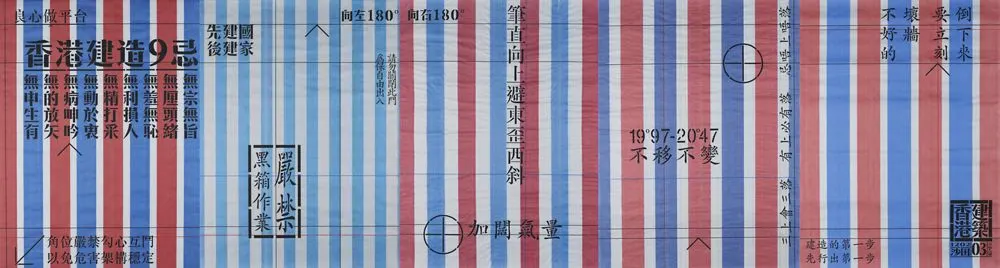
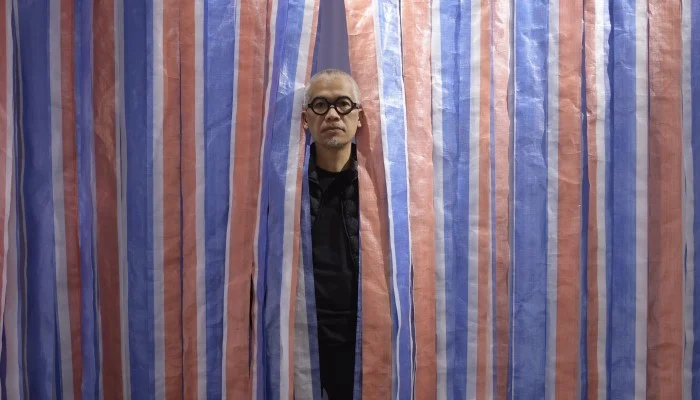
Another artist, Stanley Wong, was also inspired by this bag.
ORIGINS
Some say that the original ‘Red-White-Blue bag’ was originally made from nylon canvas in Japan, then exported to Taiwan and eventually came to Hong Kong where it became famous.
It was first used for bags in the 1960s by a tailor, Lee Wah. Bags were only blue and white in the first place, but red was added to the fabric so that the colour combination represented luck and good fortune.
In Namibia the bag is called “Mwaudako” meaning you also heard the news of the death of a certain person – it is used to gather the dead person’s possessions.
In Namibia some call it Mairandopi, some Maidako or ‘No problem’ because anything can fit in it.
In Guyana and the Caribbean it is called the “Guyanese Samsonite”
In Hong Kong they call them “amah bag” named after the domestic servants in hong kong and the bags they carry on their days off
In Turkey, the bags is called the “Türkenkoffer” which translates to “Turkish suitcase”
In the UK and other countries this bag is also called the Red-white-blue bag.
TATI AND VICHY
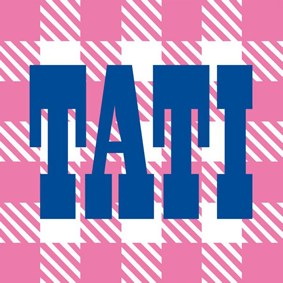
Meanwhile in France TATI was making its name as a hard discounter with a similar “Cabas bag” and a unique identity based on the Vichy gingham motif.
It is a French name known as gingham, a plain fabric made of dyed cotton or cotton-blend yarn.
When originally imported into Europe in the 17th century, Gingham was a striped fabric, while now it is known for its checkered pattern. The change occurred when mills in Manchester, England, began to produce the print in a checkered design.

“Founded by a Tunisian immigrant at the end of the second world war in the mainly west African Barbès district at the foot of Montmartre, Tati grew into more than 100 outlets around France, and its pink-and-white chequered carrier bags became a style statement for film stars and celebrities.And in various other places, the “Refugee Bag”. It is often associated with and used for migration.”

What’s interesting, is that the famous Cabas bag has always been popular. “Some of France’s most glamorous women have been more than happy to be seen sporting them in public, including the film star Brigitte Bardot, the novelist Françoise Sagan and even the wealthy socialite Nadine de Rothschild.”
So, how did this bag become so synonomous with refugees?
“GHANA MUST GO”
In Ghana, the bag is simply referred to as Ghanaian sack or “Efiewura Sua Me”, literally “help me carry my bag”.
After a sudden decree by the Nigerian government in 1983, over a million Ghanaians were thrown into confusion and indecision as they had to return to their crisis-engulfed homeland, Ghana. This mass exodus and the need to transport such loads lead to them leaving their ordinary luggage and using their “Ghana Must Go” bags which were much more suited to transporting large amounts of belongings. Hence, this name became synonymous with the bag.

These bags have now become global symbols of migration – not only across borders but also within countries. They are objects that carry a home and act as a means of survival for one who does not have many possessions.
But the Tati bag also become a status symbol over time, with many luxury brands developing their own versions.
In 1991 there was a critically acclaimed collection by Azzedine Alaia, modelled by Naomi Campbell for the fashion photographer Ellen von Unwerth
And here is Louis Vuitton’s version of the bag designed in 2007 by Marc Jacob.
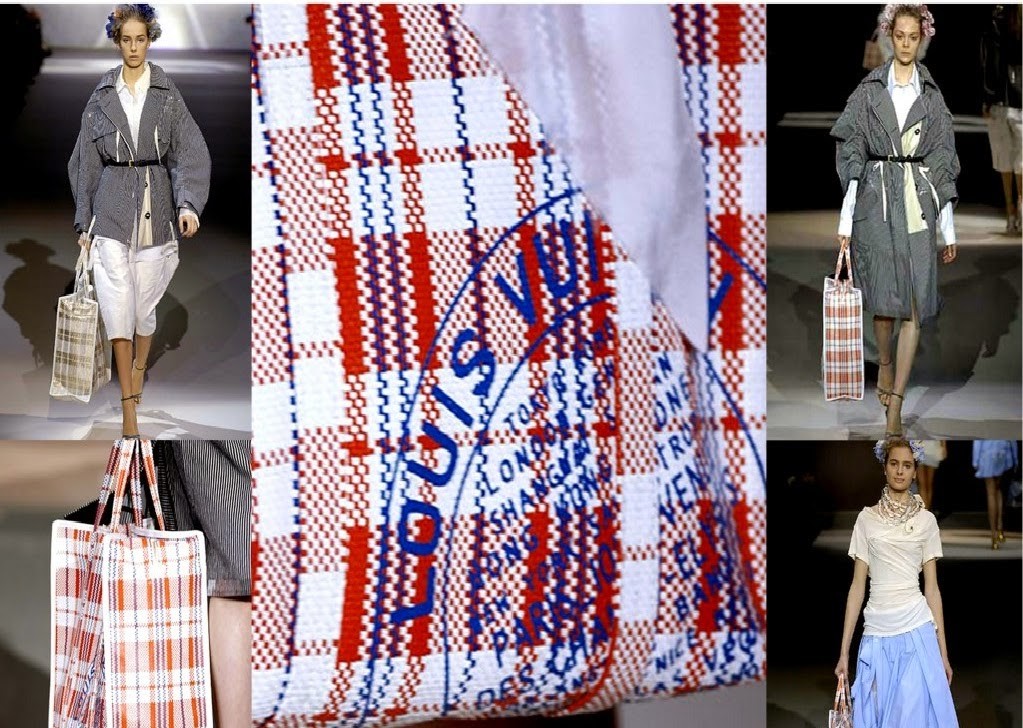
Celine also had its own collection inspired by the bag in 2013.
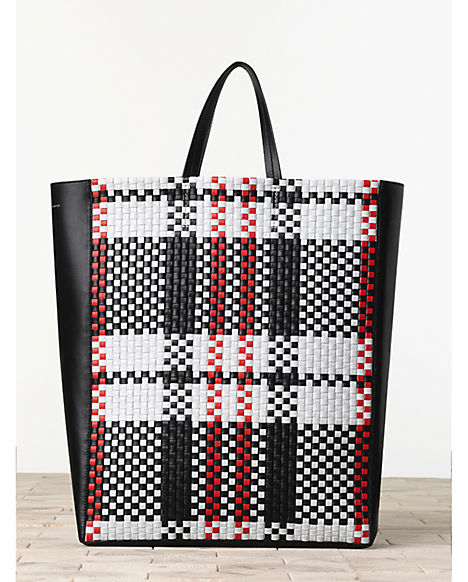
And of course, Balenciaga also designed its own version of the Red-White-Blue bag in 2016. Selling for a cool 2,000 euros.

But probably the most exciting ranges I found, inspired by the original “Ghana Go Home” bag are from African fashion designers, who have reinvented the bag in their way, with their culture.
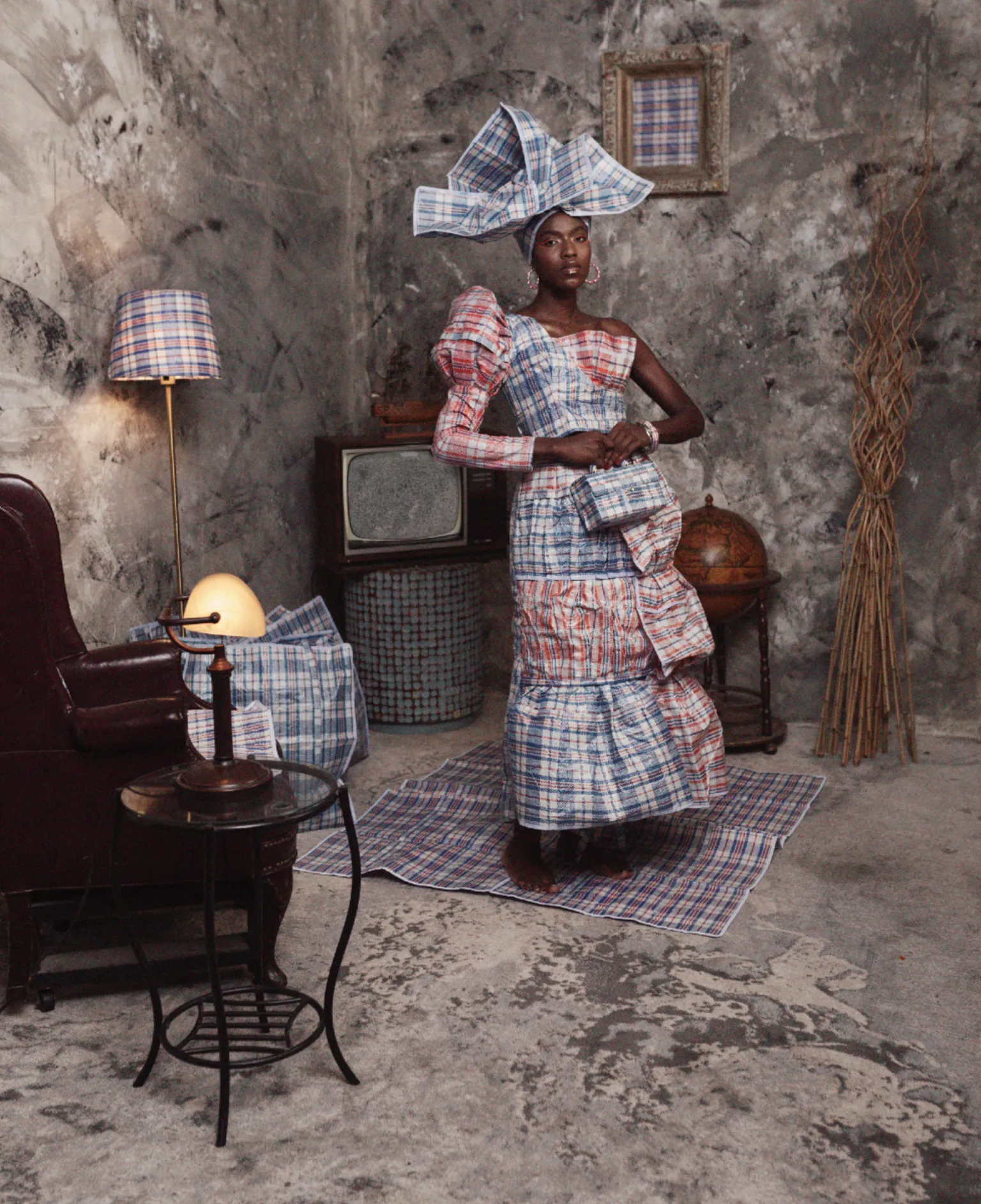
Nigerian photographer Obinna Obioma is using creative ways to display an iconic West African plastic bag to reflect on migration.
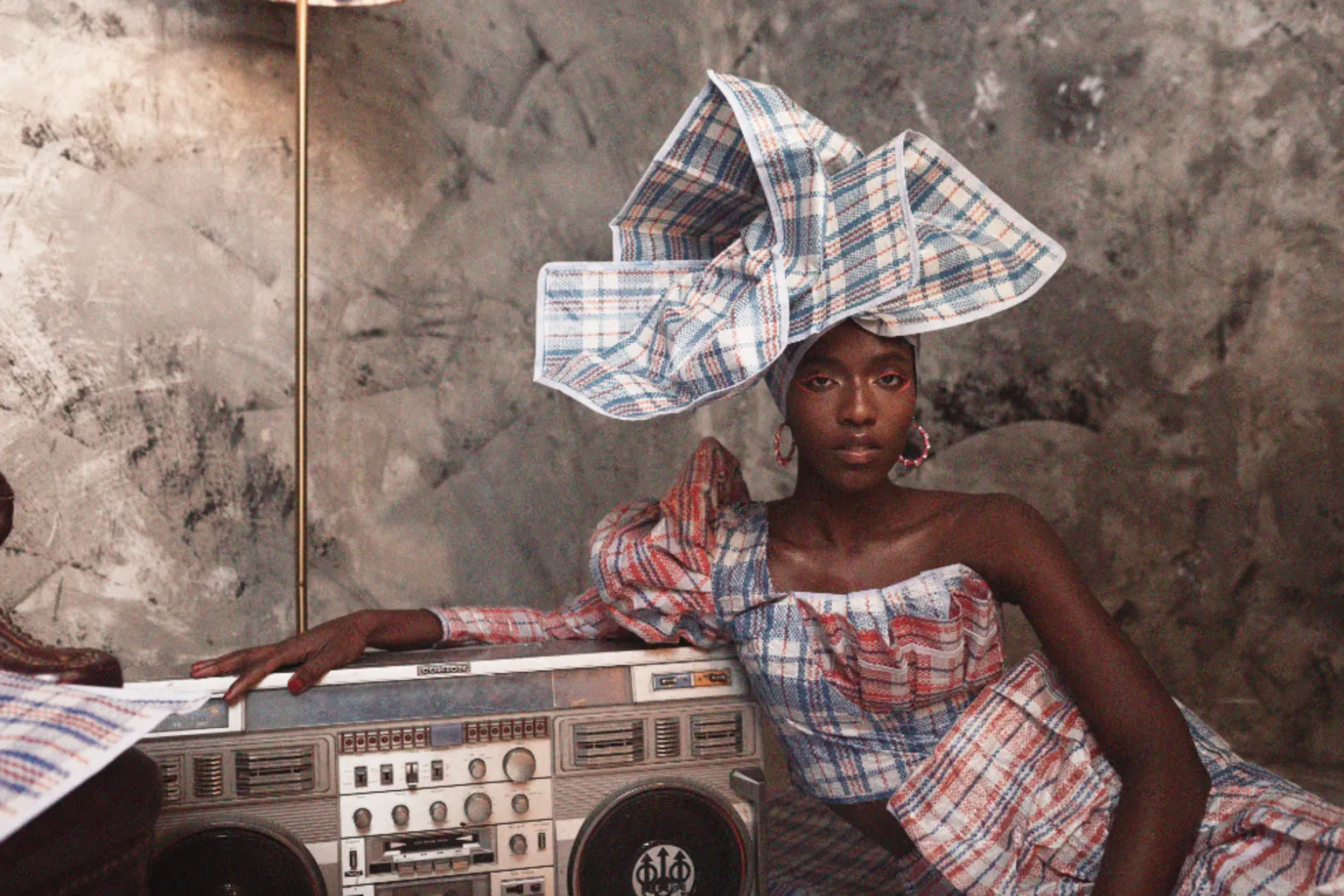
“In Anyi N’Aga (Igbo for We Are Going), Obioma reflects on how the bags have transcended their courier status and are used as a personified symbol of migration – being used to carry not just belongings but also culture, heritage and memories.”
This was why I chose to wrote this post. This bag now represents so much to so many.
“The Ghana Must Go bag has come a long way, including a ban imposed in 2017 by KLM and Air France, who said it could unravel and so clog up baggage delivery systems.
The ban still remains despite protest at the time by Ghana authorities who described it as “not only insulting but smacking of racism and discrimination” given that the bag was commonly used by African travellers.”
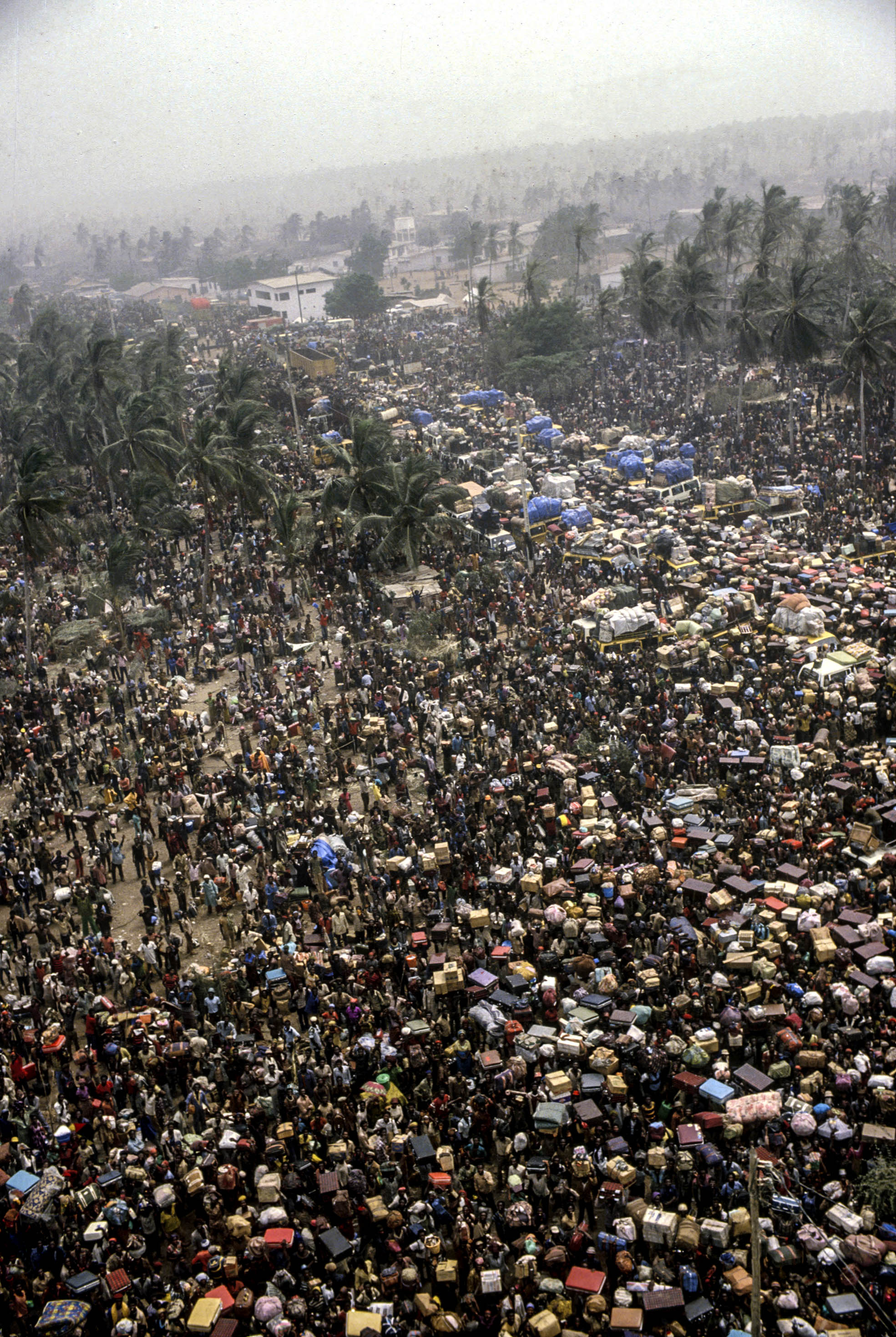
This sturdy, woven plastic bag, has become a representation of mass deportation and xenophobia.
“The bags had always been popular: they were big and spacious and sturdy enough for long-haul travel. But it was when people started calling them “Ghana must go” bags that this young man knew it was time to leave. The bags followed him home, as he crossed two countries to return to Ghana and, 36 years later, they still stare at him from stores on every corner — with the same cursed name. They represent a period of despair that many Ghanaians would rather forget.
“I was not ready to leave,” said Acquaye, now 67. “I had just one bag with me.”
One bag. Can you imagine the scene. What would you put in yours. Here’s an article studying this aspect of mass migration and deportation.
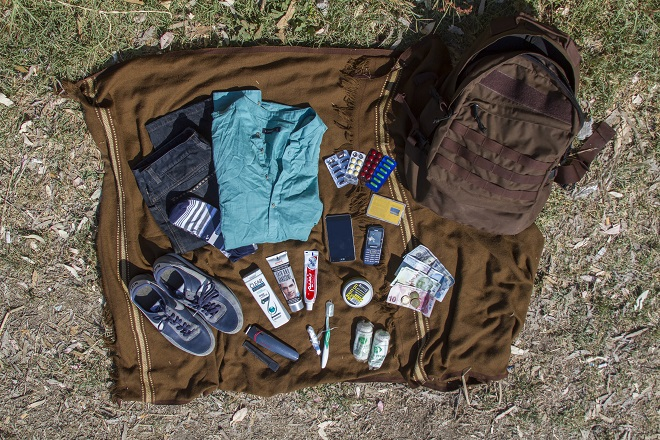
1 pair of pants, 1 shirt, 1 pair of shoes and 1 pair of socks
Shampoo and hair gel, toothbrush and toothpaste, face whitening cream
Comb, nail clipper
Bandages
100 U.S. dollars
130 Turkish liras
Smart phone and back-up cell phone
SIM cards for Afghanistan, Iran and Turkey
“I want my skin to be white and hair to be spiked — I don’t want them to know I’m a refugee. I think that someone will spot me and call the police because I’m illegal.”
So, let’s take a moment to think about all the people using these bags everyday. Whether they are for a long difficult journey far from home, or for taking your laundry to the launderette. You may think that these bags are basic, perhaps you wouldn’t want to walk down the street with one, but, they were designed by someone for a purpose and did have a strong cultural meaning in their original state through the pattern, the colours, the materials, the size…
That meaning has changed dramatically over time and now represents an iconic association to negative sea crossings, to many, many deaths, to many different peoples who have had to leave their lives suddenly – their cultures, their loved-ones, their small comforts, their jobs, their homes. This bag becomes something very important when thinking about all that they have lost.

Thank-you for reading and if you would like to donate money to a charity working in this area, here is a link to an organisation I have personally worked with on a project at my school. The Hope Project in Lesbos, Greece.
A big thank-you to Siobhan Gately for finding some of the references for this post.
I am currently writing a book about this bag, so if you have any further information on it, or would like to be featured in it. Please get in touch.
 DESIGN RESEARCH, MUSINGS AND INSPIRATIONS