
I am currently carrying out research for a book I am writing on the Refugee bag (originally called the Red, White, Blue bag), and came across this work by anthropologist Arjun Appadurai. He transformed how we look at “stuff.” In his seminal work, The Social Life of Things (1986), he argued that objects aren’t just inanimate matter – they have biographies, just like people.
Appadurai shows us that an object’s meaning is never fixed, it changes depending on whose hands it is in. If you look at the items you carry every day, which one has the most complex ‘social life’? Is it a gift, something sentimental, or something you bought that has become ‘singular’ to you?”
Appadurai developed a framework of 5 stages for anyone looking to understand why we value what we do. I have explained the 5 steps below:
1. The Commodity Phase: The Store Shelf
Before the crisis, the bag exists in a standard commodity phase.
- Regime of Value: It is defined by its retail price ($10 – $20) and its utility.
- Knowledge: The consumer sees it as a “laundry or moving home bag” It is mass-produced and replaceable. At this stage, it has no “soul”—it is just one of thousands.
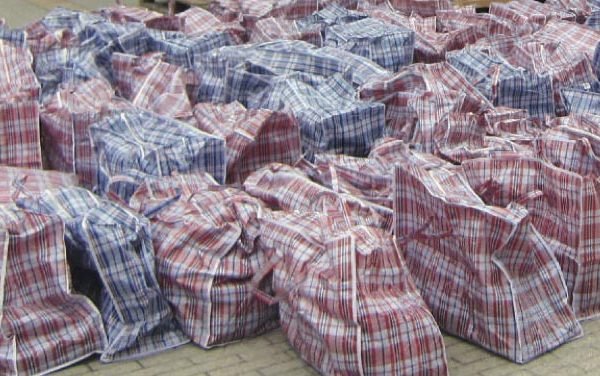
2. Singularization: The Life-Support System
The moment a person is forced to flee, the bag exits the commodity phase and undergoes singularization. It becomes “de-commodified.”
- The Transition: It is no longer for sale; it is priceless. It becomes a curated archive of a life left behind—holding deeds to houses, family photos, and essentials.
- Value Shift: Its value is no longer financial; it is existential. If the bag is lost, the “value” lost is the person’s identity and history, which cannot be replaced by buying a new one.
3. Shifting Regimes of Value: The Border
As the bag moves across borders, it enters different “neighbourhoods” where its meaning is redefined by outsiders.
- To the Refugee: It is a “home” they can carry.
- To the Border Guard: It is a “security risk” or a “piece of luggage” to be searched.
- To the Humanitarian NGO: It is a “metric” of a crisis (e.g., “we distributed 5,000 bags today”).
The bag doesn’t change physically, but its “social potential” changes based on who is looking at it and where it is located.
4. The Politics of Diversion: The Museum or the Media
Sometimes, these bags are “diverted” from their original path to serve a political purpose.
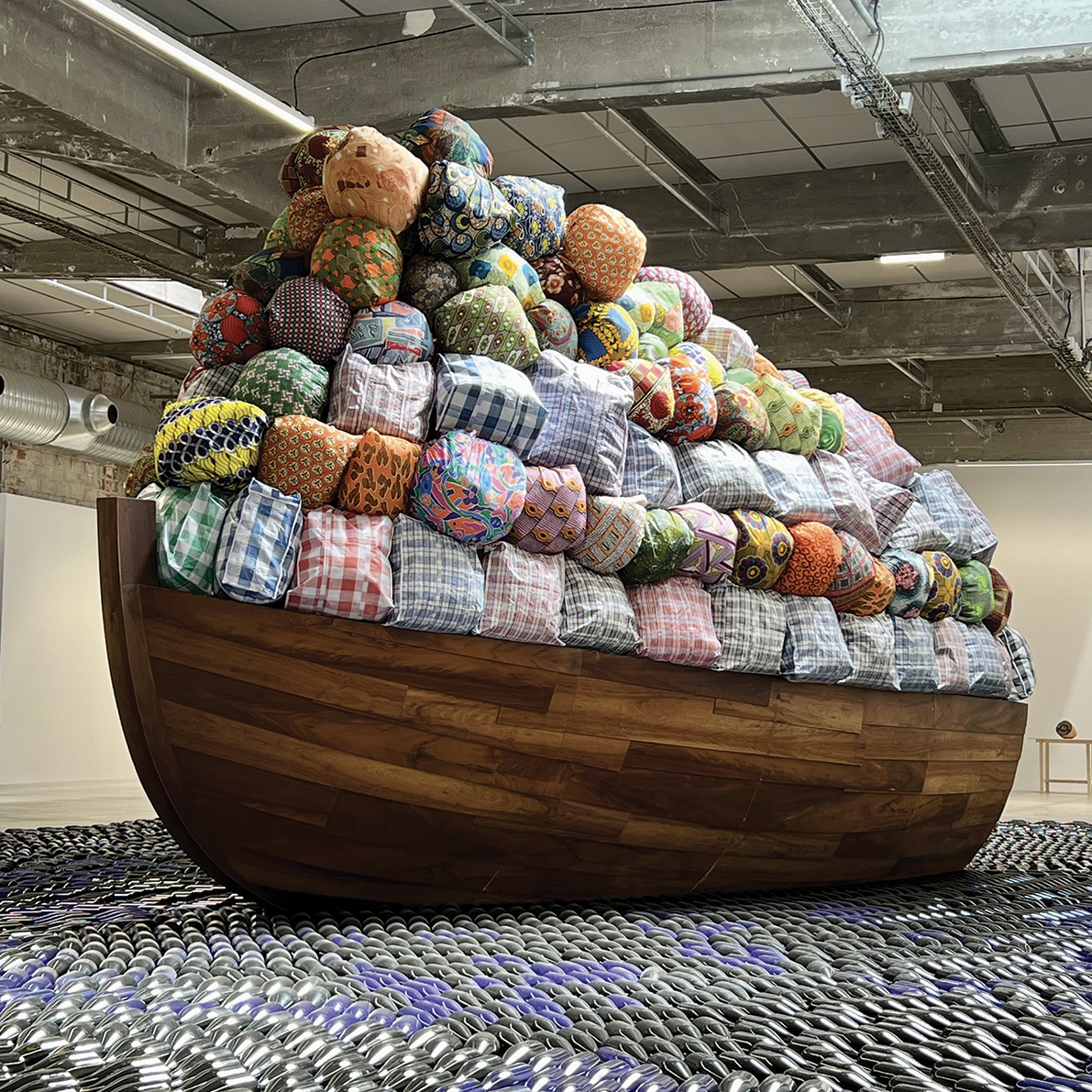
- The Artifact: When these bags are collected and put into a museum exhibit, they enter a new regime of value by artists of different cultures.
- The Politics of Knowledge: In a museum, the bag becomes a “symbol of the migrant crisis.” The original owner’s personal “biography” of the bag is often replaced by a broader, more anonymous political narrative curated by the institution. Please take a look at this related article.
5. Tournaments of Value: The Global Stage
The final stage occurs in what Appadurai calls Tournaments of Value—high-stakes arenas where the status of the object is contested on a global scale.
- The Arena: Think of UN summits, international art biennials, or global conferences.
- The Struggle: Here, the bag is used as a token of power. World leaders or philanthropists “bid” on what the bag represents: Is it a symbol of a failed state? A testament to resilience? Or a “burden” to be managed? The winner of this tournament decides the “official” value of the refugee experience for the rest of the world.
In Summary: The “Heartbeat” of the Object
Using Appadurai’s framework, we see that the refugee bag is never just “trash” or “luggage.” It moves through a dramatic and often violent lifecycle:
- Product: A mass-produced tool of convenience.
- Relic: A singular, priceless archive of a lost home.
- Site of Conflict: A contested object at a border crossing.
- Symbol: A diverted artifact used to tell a political story.
- Geopolitical Token: A high-stakes asset in global power negotiations.
Its “social life” is a map of a human struggle for survival and recognition. It reminds us that the objects we carry often carry us!
#Anthropology #MaterialCulture #Appadurai #Sociology #RefugeeStudies #HumanRights #ActForHumanity #RefugeesWelcome #SocialJustice #GlobalCitizenship #TheSocialLifeOfThings #HumanHistory #ObjectBiographies #Identity #Storytelling
 DESIGN RESEARCH, MUSINGS AND INSPIRATIONS