
I have been running seminars and workshops at #RennesSchoolofBusiness this semester to students studying for an MSc in International Luxury and Brand Management. My courses are entitled Sustainable Design and Brand Identity in the Luxury Industry and as such I spend many hours dedicated to the different specialisms in design such as brand and Corporate Identity, Communications, Packaging Design, Interior Design and Architecture, Product Design and Sensory Design and make them relevant to sustainability and in particular circularity.
I prefer to put students in the position of a designer in certain classes to understand how a designer thinks, or practices their work.
This year, I developed a new tool to analyse packaging from a position of Circular Design. It uses the 7Rs (you will find them below).
It is based on some of the solutions from Ellen McCarthur’s Butterfly diagram on the right hand side.

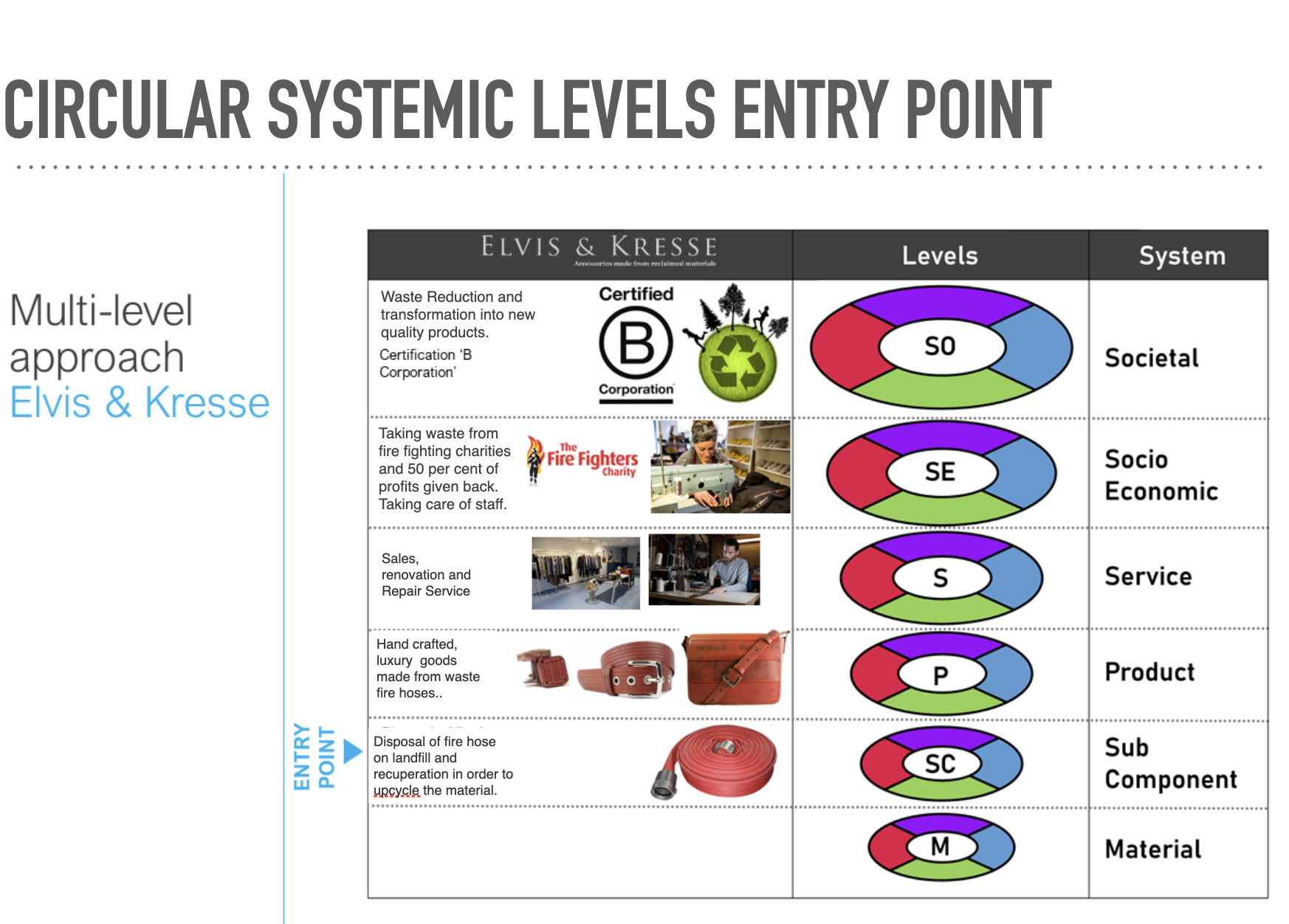
And also looks at a more systemic approach inspired by the work of Delft University and developed further by la Grande Boucle Circulaire. This example shows the work of Elvis and Kresse as they upcycle fire hoses into premium bags and accessories, and the impact they have from collecting the materials to potential societal problems arising from their work.
The exercise takes place over the course of 1 hour. Each group of students has to choose a piece of packaging bought into class. This is the pack they will focus on, analyse and create new sketch ideas for as well as re-naming the range with micro-storytelling.
The First R is RATE the pack with the criteria given in the check-list to see where it scores well and where it scores poorly. This can then help them in their analysis in the following sections.
The second R is RE-DEFINE the function of the product (not the packaging)?
Re-define the function. Could we buy your product in another format? Could we make it more eco-friendly? Less water? Less chemicals? More healthy? Could the customer make it themself? (DIY). Could we buy it as a refill – how could it work?… other ideas?
The third R is REDUCE.
Reduce the packaging materials. Could we make the pack smaller? Reduce the carbon footprint of the pack or its transportation or other ways? How about the text, the descriptions, the graphics, the level of information? Could we reduce the amount of materials? What are those materials?
.The Fourth R is REUSE.
Re-use Waste Streams (like the examples of Vueve Cliquot, Jacquemus, Burberry…). What waste streams are generated by this brand? Could we use these waste streams to make the packaging? Or other brands’ waste streams (using the example of La Bouche Rouge’s collaboration with Stella McCartney).
How can we re-use the pack after its first use for other things? How wan we prolong the usage with new materials, a new positioning?
On the 2nd page, students have to get more creative with their ideas through the use of sketches, storytelling, motivating the customer.
The Fifth R is RE-DESIGN the pack or develop a system/service. Here, they have to sketch some ideas… thoughts… Does the format of the product change?
Re-design the pack or service. Sketch some ideas and thoughts, with notes. Does the format of the product change? Does the format of the packaging change? Size? Materials? Aesthetics? Positioning…. Does it become a service –Example. refill station for perfumes…
The sixth R is REWRITE
Re-write the story/narrative. What’s the new story? How do you bring the sustainable values in? How do you make customers feel good buying this new product/packaging
Why would someone buy this new pack? What would motivate them.
Could climate benefits be enough to be a fitting reward? Could it be seen as green-washing? Or could other elements be thought about – price? Ease of service/system? Interesting re-use element.
This exercise worked pretty well, although timing was tight, and there were some re-adjustments to be made to give more elements some more time.

“A step further in the approach of eco-responsibility, from the house of Veuve Clicquot. With our wonderful grapes we create our unique champagne. Then, we transform the grape’s skin into a bio-based material in order to create our new innovative packaging.” Veuvre Cliquot.
Here are some of the students thoughts and ideas around the subject… too many to show here, but there were some interesting reflections around prolonging use and using packaging in a different way.
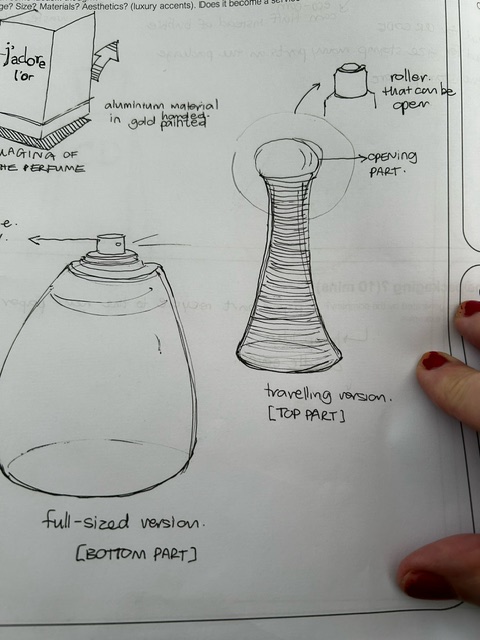
Idea for using neck of packaging as a travel roller.

Idea for using waste textiles as a secondary protection for perfume bottle.
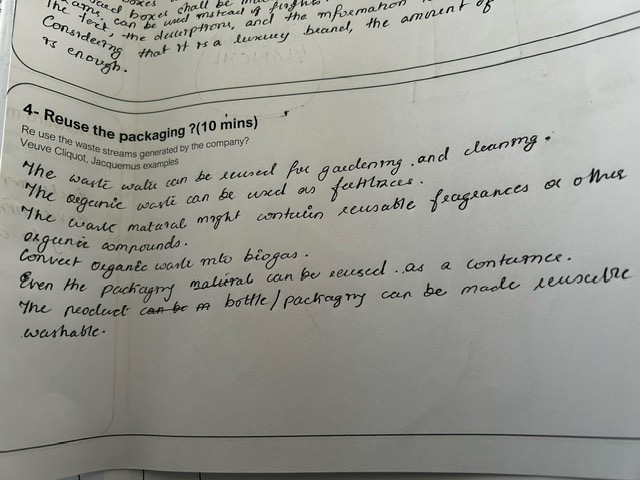
Ideas for re-using waste streams from various aspects of the perfume production process.
If you would like to know more about the process or the courses I run in this area, please get in touch.
 DESIGN RESEARCH, MUSINGS AND INSPIRATIONS